

You’ve got your STPM results and you’re excited about university. But right now, you may be wondering what course you should study after STPM—and there are so many choices.
That’s why we’ve narrowed down everything into these bite-sized options. You’ll understand what they are, and what exciting career paths they will open for you once you graduate.
Oh, and before we forget, we’ve got loads of other helpful articles and news on our socials: Facebook, Instagram and LinkedIn
Medical Sciences
Doctors are the real-life superheroes that save lives every day; it is one of the noblest professions around. A Bachelor of Medicine-Bachelor of Surgery (MBBS) degree gives you the chance to be an everyday hero. It’s also the option that will make your parents super proud (we’re kidding, they’re proud of you no matter what.)

An MBBS degree takes 5 years. Years 1 and 2 focus on integrated basic sciences with early clinical exposure. Years 3 to 5 focus on the clinical sciences integrated with the applied aspects of basic and laboratory sciences. You also have the option of practising in Malaysia or beyond.
But if you’d rather focus on medicine’s scientific aspects of medicine, take up a degree in Biomedical Sciences. The programme gives students a systematic understanding of the fundamentals of human biology and medical sciences.
Graduates pursue careers in diverse fields related to health, scientific research and industries in competitive national and international environments. You could be a biochemist, geneticist, microbiologist, forensic scientist and so much more!
Pharmacy
COVID-19 has shown us the importance of the healthcare industry. And pharmacists play a huge role in keeping society healthy and safe.
Pharmacists are experts in medicines and medicine management. The profession continues to be in high demand, attracting some of the highest salaries after graduation and registration. Once you graduate, you can also enter areas of practice like academia or the military.

There are three major practice areas—industrial pharmacy, clinical pharmacy and community pharmacy.
In industrial pharmacy, pharmacists research and development medicines.
Under Hospital/ Clinical Pharmacy, pharmacists are trained to provide pharmaceutical care.
And in Community Pharmacy, pharmacists serve the public by dispensing and managing medicine.
Engineering
Most of the ideas that shape today’s world involve engineering. Cars, manufacturing, homes, plumbing, or even the device that you’re reading this on! Engineers make ideas real, and as long as there’s a need to build, there will be a need for engineers.
There are many different types of engineering courses that you could study depending on what you’re interested to study after STPM. Some of the choices include mechatronics, electrical, civil, and environmental engineering.
Computing/Actuarial Sciences
Just a while ago, you could only use phones to call people. Now they’re a world of their own—and it’s all down to the advancements in computing. In this field, you’ll basically learn to create the future.
You’ll be learning skills like Artificial Intelligence and the Internet of Things. So if you’ve always dreamed of creating the next big app or technology, Computer Science or Information Technology is what you need to study after STPM.

If Maths is one of your strongest suits, Actuarial Sciences may be the perfect course for you. Actuaries use mathematics to predict finance-related risks, especially in the banking and insurance industries.
There is a high demand for quality actuaries in financial planning institutions, corporations, investment companies and brokerage firms. This especially applies to risk management and financial consulting services.
Biological Sciences
Our world is changing. It’s never been more important to find new innovations that will find a beneficial balance between nature and modern technology.
Biotechnology and Environmental Technology degrees give you the chance to make a difference in our planet’s future. Here is where you can learn to solve food shortages, prevent ailments, reduce pollution and conserve our beloved environment.
Communications
Learning communication isn’t just about talking. It actually covers a wide array of fields and career opportunities, including Journalism, Corporate Communication and Advertising.
If you’re interested in becoming an advertiser, reporter, newscaster, or PR executive, a communication degree is a great bet. You also have a lot of opportunities to work in in house communication departments for different companies.
Psychology
If you’re curious about why humans do the things we do, a Bachelor of Psychology is what you should consider studying after STPM.
A Psychology degree gives you the skills and knowledge to ask critical questions, observe behaviour, collect and analyse data.
But there are many more career options besides being a psychologist. Your skills will make you sought-after in human resources, recruitment, market research, communications, social work and sales.
Education (TESL/Special Needs/Early Childhood)
We’ll always need teachers to inspire the minds and leaders of the future. There are a lot of after-STPM study options if you have a passion for helping young people.
You could become an English teacher by taking TESL, or specialise in teaching Early Childhood Education. If you’ve always wanted to help children with special needs, you can join a Special Needs Education degree course. Teaching has changed throughout the years, but one thing remains the same: it’s an incredibly rewarding and self-fulfilling job.
Hospitality/Culinary Arts
Would you like to build a career in some of the most exciting, famed attractions in the world? Sounds like a dream, right? You can with the glamour and thrills of the culinary and hospitality industry.
A Hospitality Management degree gives you the chance to work in leisure facilities, hotels, resorts, theme parks and event management.
So what about Culinary Arts? Exciting and fascinating, the culinary industry allows you to unleash your creativity in full and produce masterpieces on a plate.
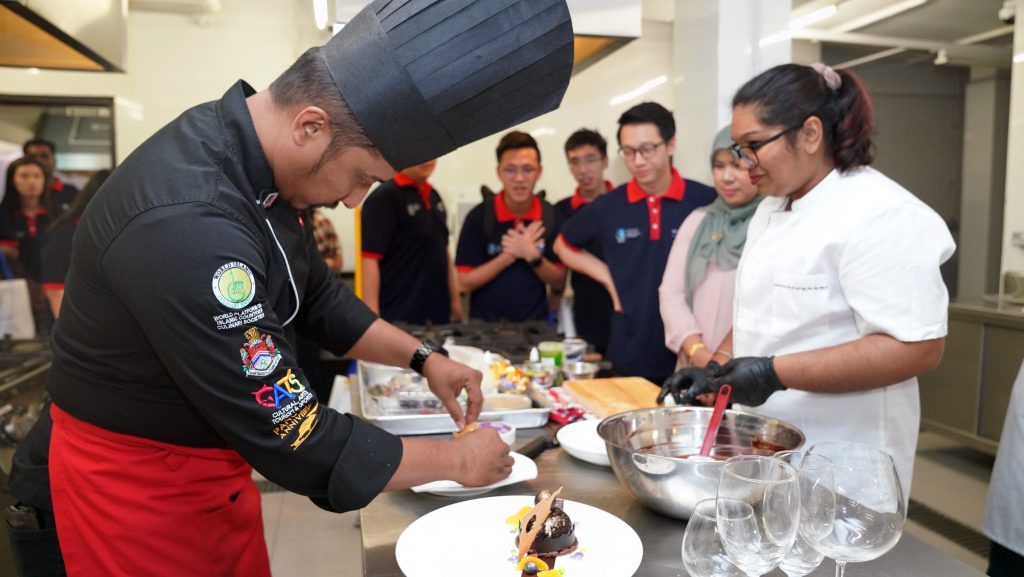
You’ll learn a wide range of skills in culinary practice, including patisserie, baking, and butchery—while mastering different international cuisines. The world can be your oyster.
Business/ Accounting/Finance/ACCA
Money makes the world go round, and the world of business and entrepreneurship is always filled with opportunity. There are many paths to study after STPM, including degrees in business, accounting, and finance. But did you know that there are differences between all of them?
A degree in Business Administration teaches you how businesses organise their resources, formulate strategies, implement cutting edge business tactics and capture the market.
In Finance, you’ll develop skills in quantitative techniques that are vital for the analysis of financial data and financial securities. In Quest International University, you will experience Malaysian securities market trading simulations and participate in a variety of events conducted by professional bodies like the Malaysian Financial Planning Council (MFPC) and the Permodalan Nasional Berhad (PNB).
If you take a degree in accountancy after STPM, you’ll gain an in-depth understanding of the areas of financial accounting, assurance, taxation, corporate finance and financial management.
If you’re already certain that you want to join the realm of accounting, getting an The Association of Chartered Certified Accountants (ACCA) qualification will be an incredible boost for your career prospects.
After you finish your STPM, you could take 13 ACCA papers. But if you want a fast-track option, QIU offers you the chance to take up a four-year degree and qualify as an ACCA member within only two years of graduation.

