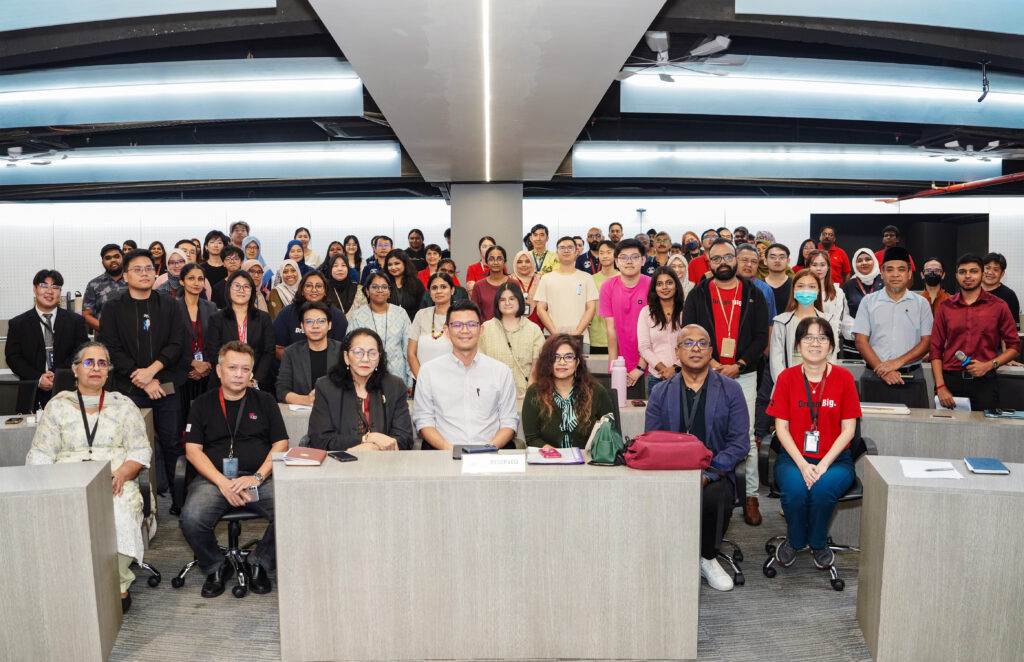

In an era where young people are constantly connected – through social media, messaging apps and digital learning platforms – public education has become one of the most powerful tools in preventing harm online. Recognising this, the QIU SDG Education cluster recently organised a campus-wide talk on cyberbullying, bringing students and staff together for a critical conversation on digital responsibility.
The session, featuring panellists YB Tan Kar Hing and Dr Vinogiri Krishnan, positioned cyberbullying not merely as a social issue, but as a public education priority.
Dr Vinogiri, an epidemiologist and mental health researcher, expanded students’ understanding of what cyberbullying looks like in practice. “Cyberbullying is not only manifested through verbal attacks. People can bully by sharing and misusing private content. This doesn’t just happen on social media, but also on chat platforms like WhatsApp and Telegram. It is important that when kids come to you, we shouldn’t trivialise their issues. Listen to them.”
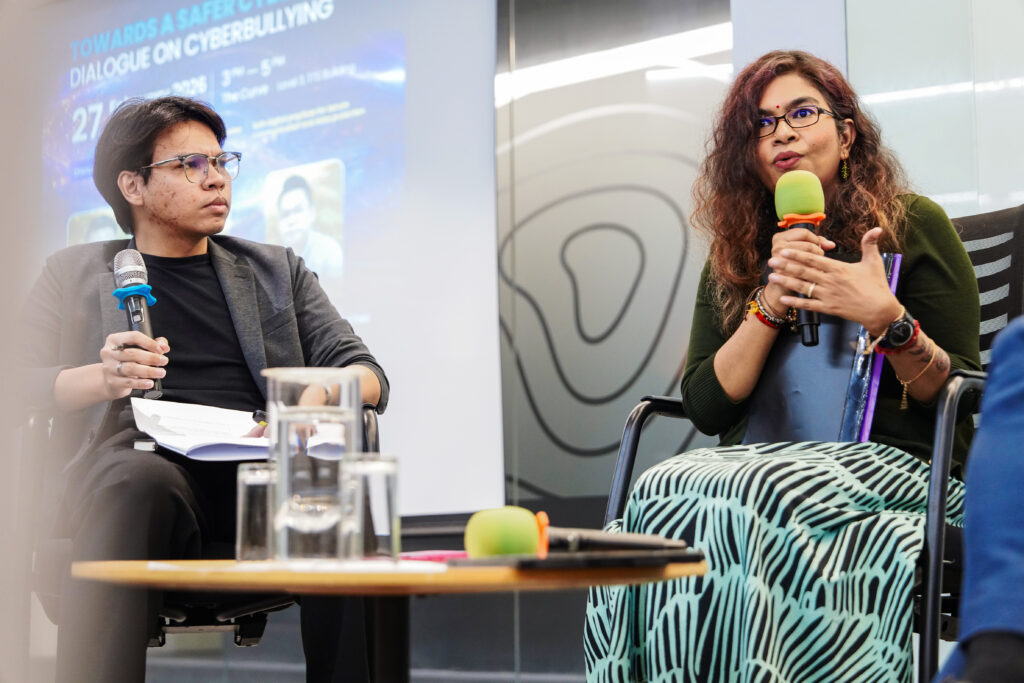
Her remarks highlighted a crucial educational gap: many still equate bullying with overt insults, overlooking the quieter but equally damaging misuse of private images, screenshots and personal information. By clarifying these nuances, the session aimed to sharpen students’ digital literacy — teaching them to recognise harm early, respond responsibly, and support peers who may be affected.
Gopeng MP Tan Kar Hing complemented this perspective by discussing the broader legislative landscape. “The authorities are looking into legislation to protect against cyberbullying. In South Korea, the government imposed regulations on superimposed and AI-generated content that can hold creators who violate laws responsible,” he said. While acknowledging that regulatory frameworks are evolving, he emphasised that informed citizens remain the first line of defence.

Beyond policy discussions, the talk served as a practical learning platform. Students were encouraged to reflect on their own online behaviour, review privacy settings, think critically before sharing content, and understand reporting mechanisms available on digital platforms. Importantly, staff members were reminded of their role as educators— to listen without dismissal when students raise concerns and to guide them toward appropriate support systems.
Through initiatives like this, QIU’s SDG Education cluster reinforces that combating cyberbullying begins with education — building awareness, empathy and digital responsibility within the university community. In doing so, the institution not only addresses a present danger but equips its students with the knowledge and judgment needed to navigate an ever-more connected world safely and responsibly.