
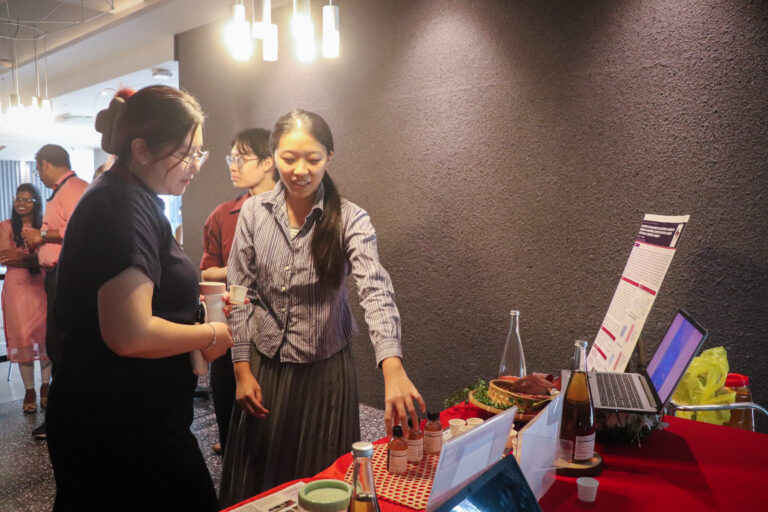
Four students from QIU are turning an often-discarded plant material into innovative food products, demonstrating how hands-on learning can translate scientific knowledge into real-world applications.
As part of the Food Product Development course under the Faculty of Integrated Life Sciences (FILS), the Bachelor of Food Science with Management students have developed banana blossom bract chips and banana blossom bract-infused kombucha. The project culminated in a product launch at the La Place cafe here recently.
Coordinated by Dr Mangalagowri A/P Sangar, the project gave students practical experience across the food product development process, from scientific evaluation and formulation to packaging, promotion and sales.
From research to real-world products
Rowena Clarisse Peter and Lee Ming Khoy developed banana blossom bract chips, investigating their nutritional and antioxidant properties to explore the potential of underutilised plant materials in snack production.
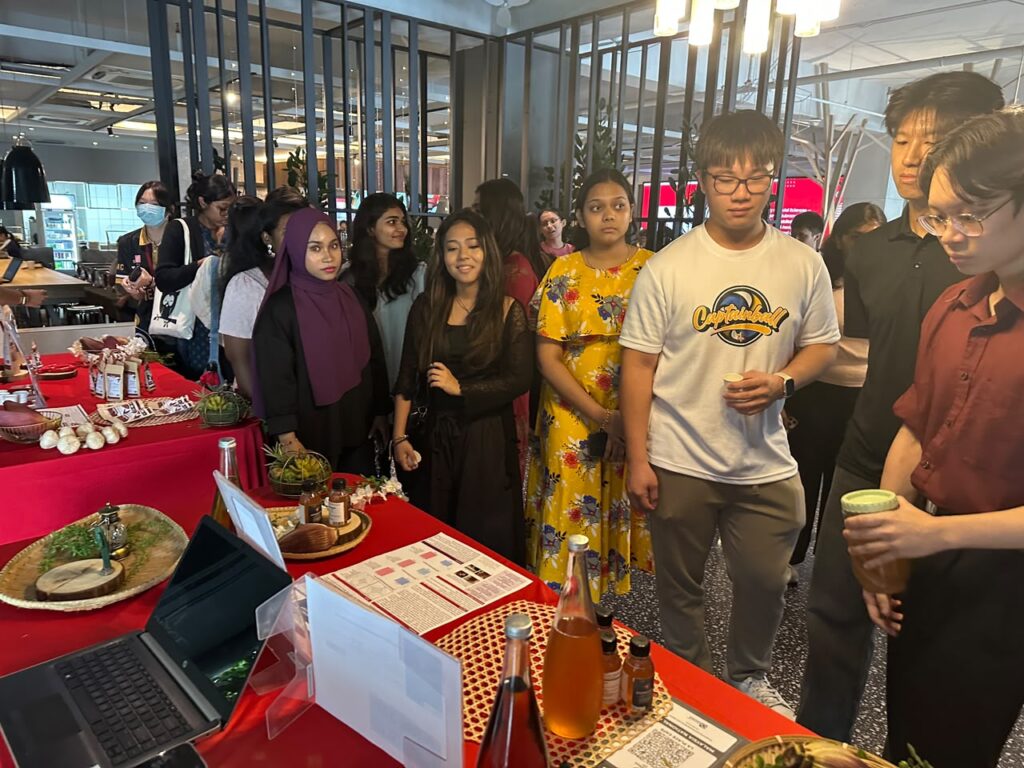
Meanwhile, Woo Yew Jin and Chung Lok Yi created banana blossom bract-infused kombucha. Their evaluation found higher antioxidant activity in the infused beverage than in plain kombucha, supporting further investigation into the ingredient’s potential for fermented drinks.
The projects challenged students to rethink how overlooked plant materials could be used in food innovation while applying scientific methods to evaluate their ideas.
Showcasing student talent
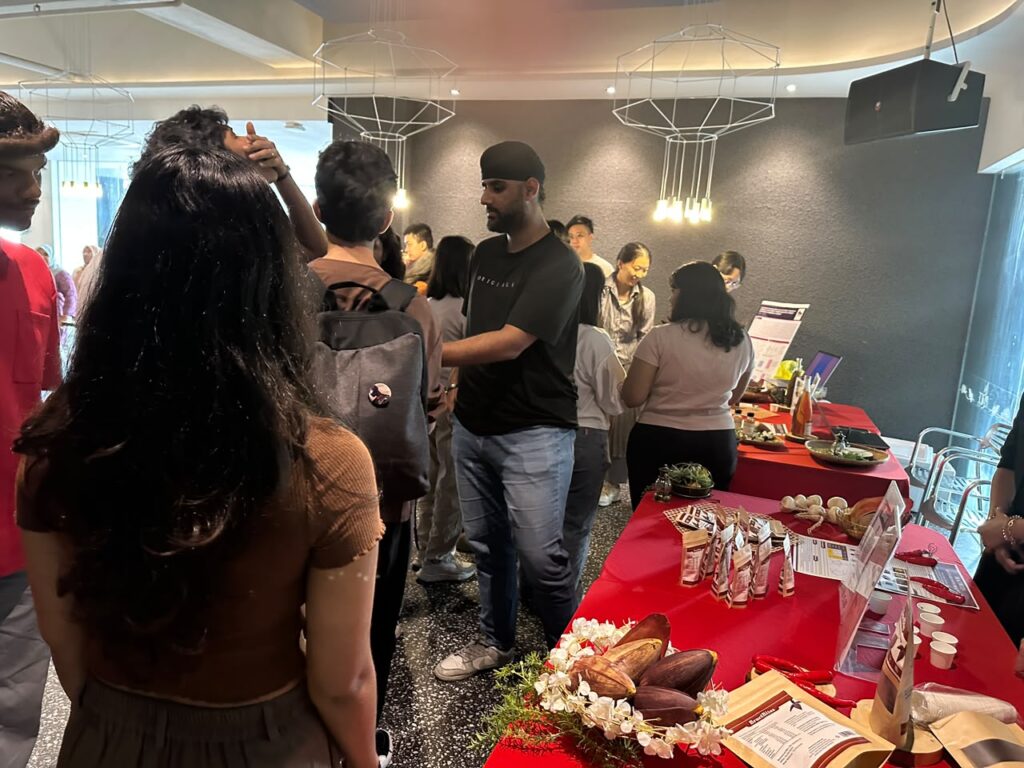
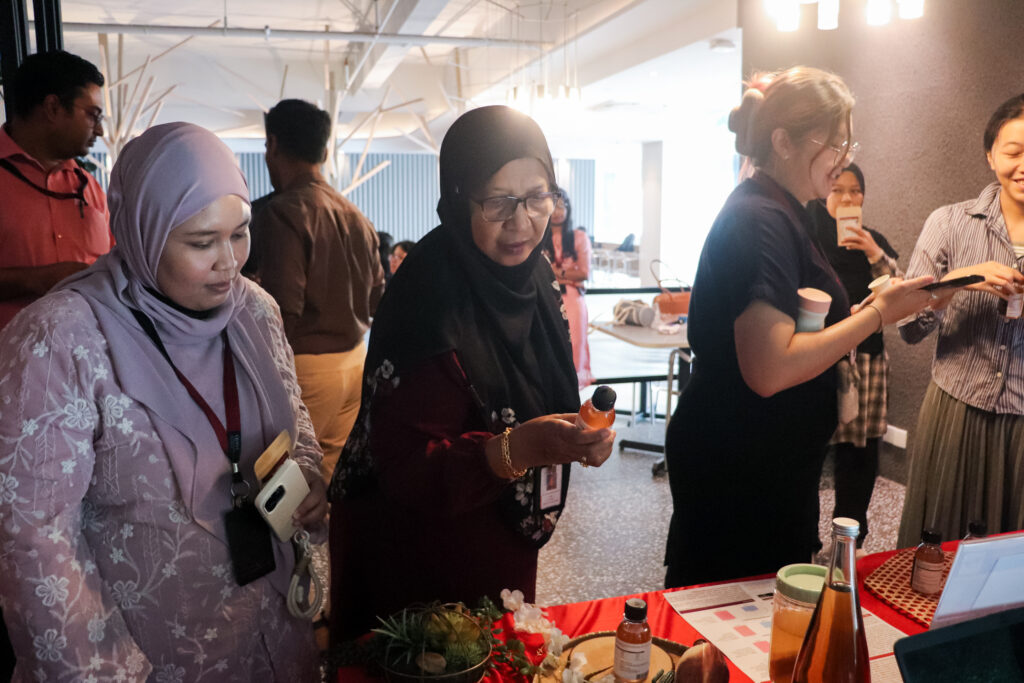
At the product launch, students presented research posters and pitched their products to QIU staff and fellow students. Visitors could learn about the science behind the innovations, ask questions, sample the products and make purchases.
The showcase gave students a platform to communicate their research directly to potential consumers while gaining first-hand experience in product presentation, customer engagement and commercial considerations. Sales proceeds were channelled to QIU.
Beyond product development, the initiative explored more sustainable uses for plant resources that might otherwise be discarded. It supports the United Nations Sustainable Development Goals, particularly SDG 12 (Responsible Consumption and Production), SDG 9 (Industry, Innovation and Infrastructure) and SDG 4 (Quality Education).
By taking their ideas from the classroom to a real-world showcase, the students experienced how scientific research, creativity and commercial awareness come together in food innovation.
Through our diverse range of courses, QIU continues to connect academic learning with practical industry challenges, giving students opportunities to showcase their talents and develop solutions with real-world potential.

