
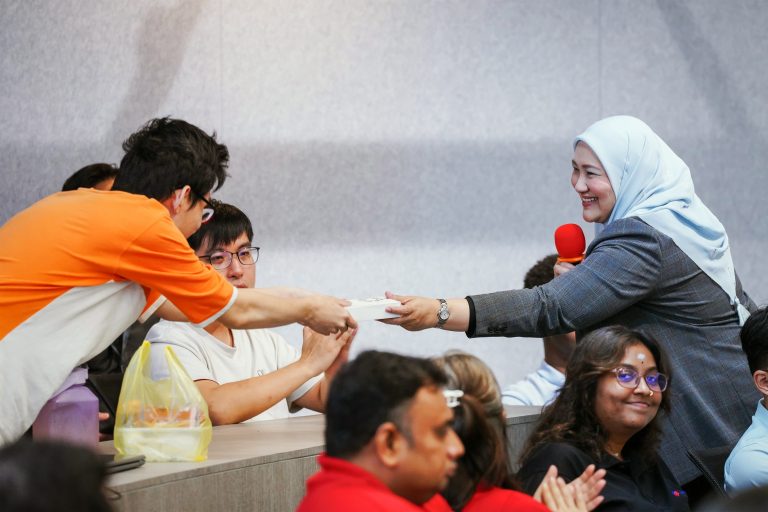
For university students, a good idea is only the beginning. Learning how to turn it into a practical solution — and having industry professionals challenge, question and help refine it — can make all the difference when stepping into the working world.
That was the experience offered to students at QIU’s Innovation Day 2026, where the Faculty of Computing and Engineering (FCE) brought student creativity face-to-face with industry expertise.
Held at our own La Place Café, the event featured final-year degree and diploma projects spanning assistive technology, cybersecurity, renewable energy and digital services. A 12-member judging panel, including eight industry professionals from seven organisations, assessed the projects and provided students with insights into real-world industry expectations.
Supported by semiconductor company Carsem, a member of the Hong Leong Group, which sponsored the awards, the event also drew expertise from organisations including Coherent, Edgenta Mediserve and IVC Consulting Group.
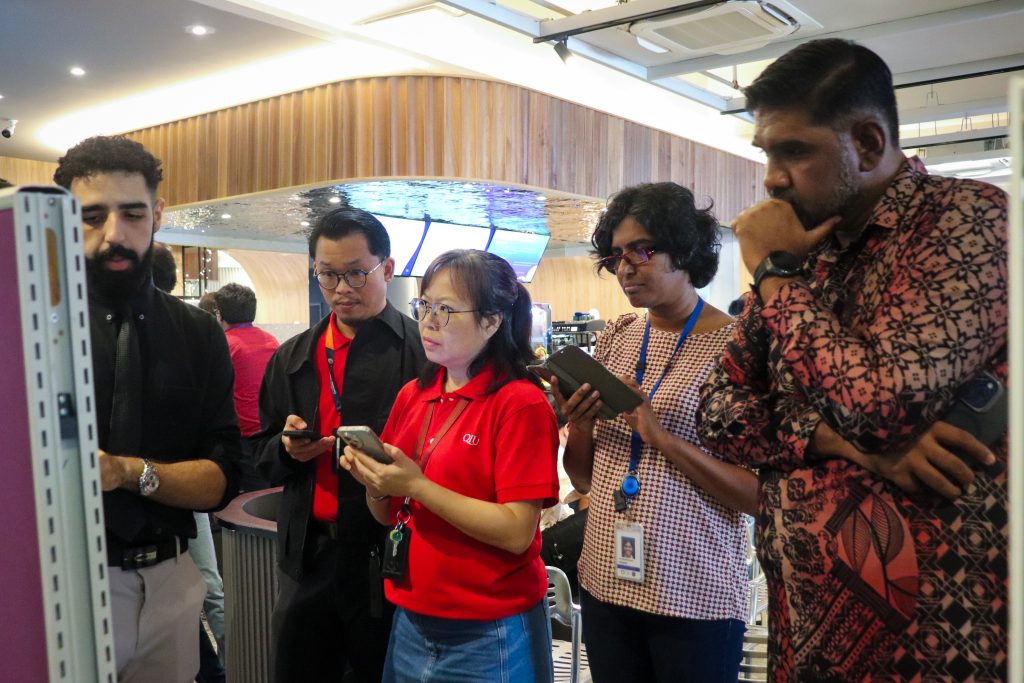
Beyond recognising innovation, the showcase gave students an opportunity to defend their design decisions, respond to professional scrutiny and understand what it takes to turn an academic concept into a viable solution. Judges assessed projects on criteria including technical approach, feasibility, innovation, prototype validation and presentation, with written feedback provided to student teams.
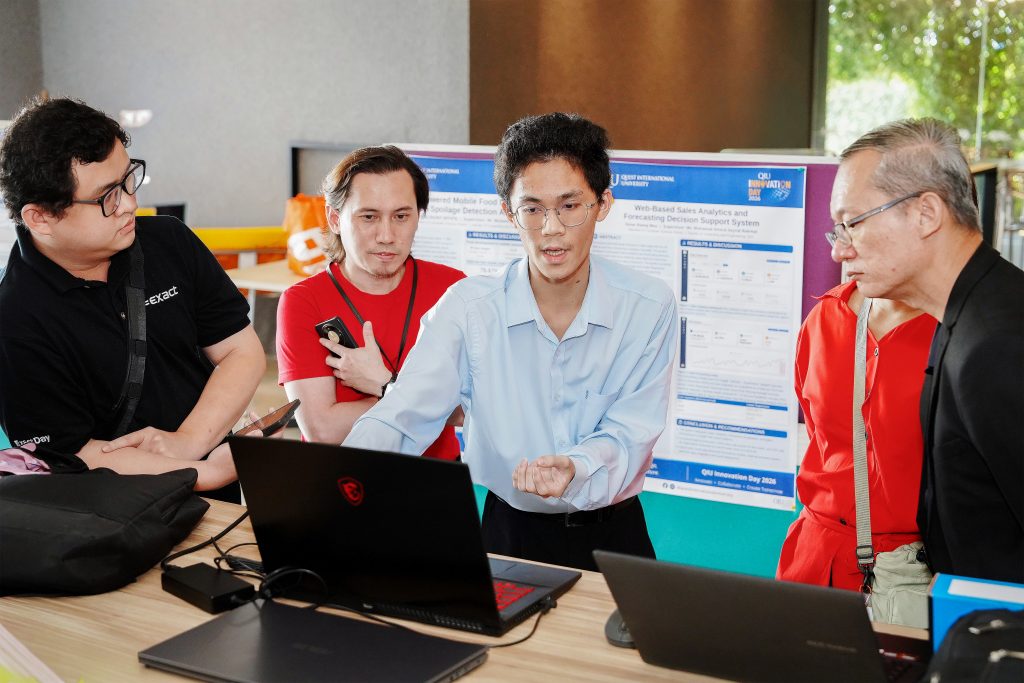
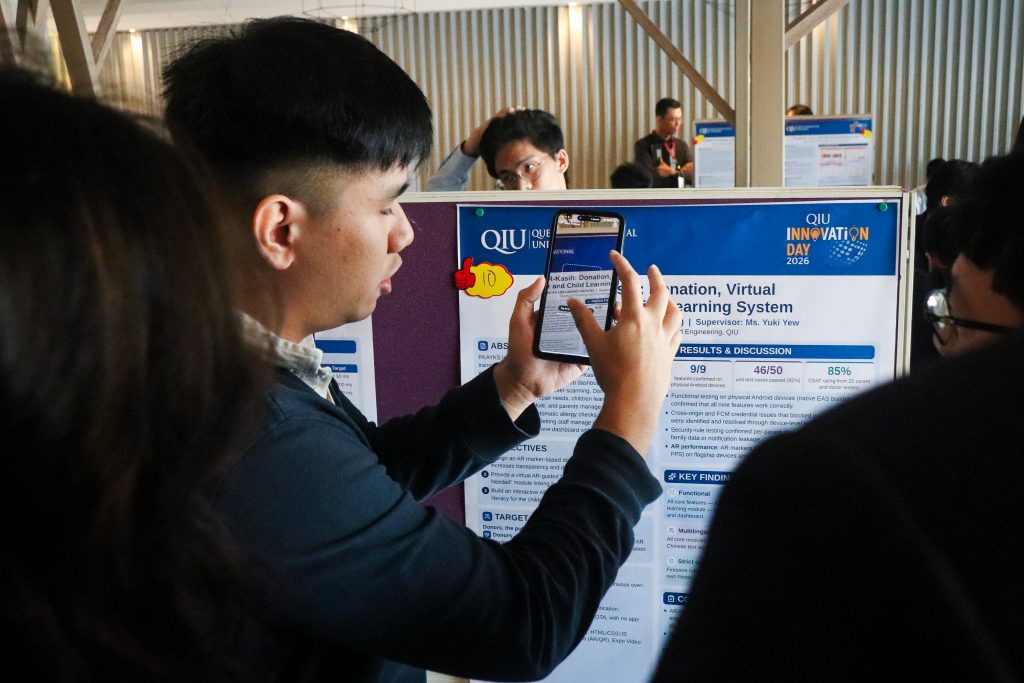
From student ideas to real-world solutions
The top award went to engineering students Tarone Jia and Ghezali Amin for their multi-modal wheelchair control system, developed under the supervision of Mr Chelladurai Sinkaram.
Using a Raspberry Pi, the prototype allows users to operate a wheelchair through eye-gaze tracking and voice commands. It also incorporates an emergency stop function and operates without an internet connection. Judges praised its attention to accessibility and user safety, while highlighting areas for further improvement, including performance on sloped surfaces.
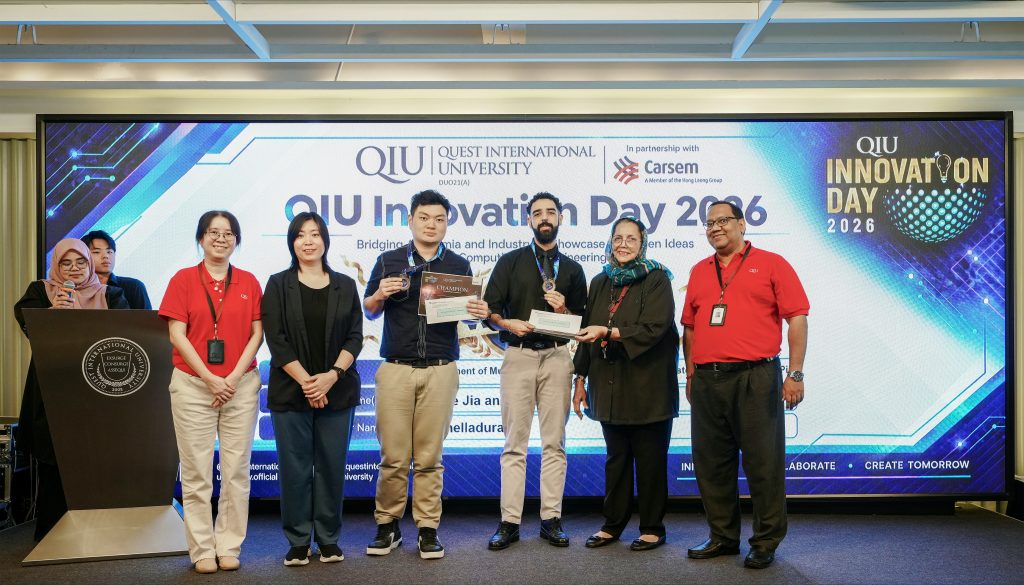
Other award-winning projects showcased the breadth of talent across the faculty. First runners-up included Enya Wong Xin Wen for a virtual-machine-based security operations centre and Venu Dharshan for research into optimising fixed solar panel angles. Second runners-up were Fatin Nur Hannah binti Muhammad Ashraf, who developed an intelligent recruitment-matching platform, and Lyvia Ailish Leong Yuin, whose project focused on multi-modal phishing detection.
The wider exhibition featured projects such as a smart shopping trolley, a library management system and a food-ordering platform, reflecting students’ efforts to address practical needs through computing and engineering.
Preparing students for the realities of work
A key strength of Innovation Day was its emphasis on feedback and professional engagement. By engaging directly with experienced industry assessors, students gained a clearer understanding of how their work might be evaluated beyond the classroom, where technical ability must be matched by practical considerations, effective communication and an appreciation of user needs.
Such exposure can help bridge the gap between academic learning and workplace expectations, easing the transition into employment and reducing the adjustment often experienced by fresh graduates entering the professional world. Rather than encountering industry standards for the first time on the job, students have an opportunity to understand these expectations while they can still refine their skills and ideas.
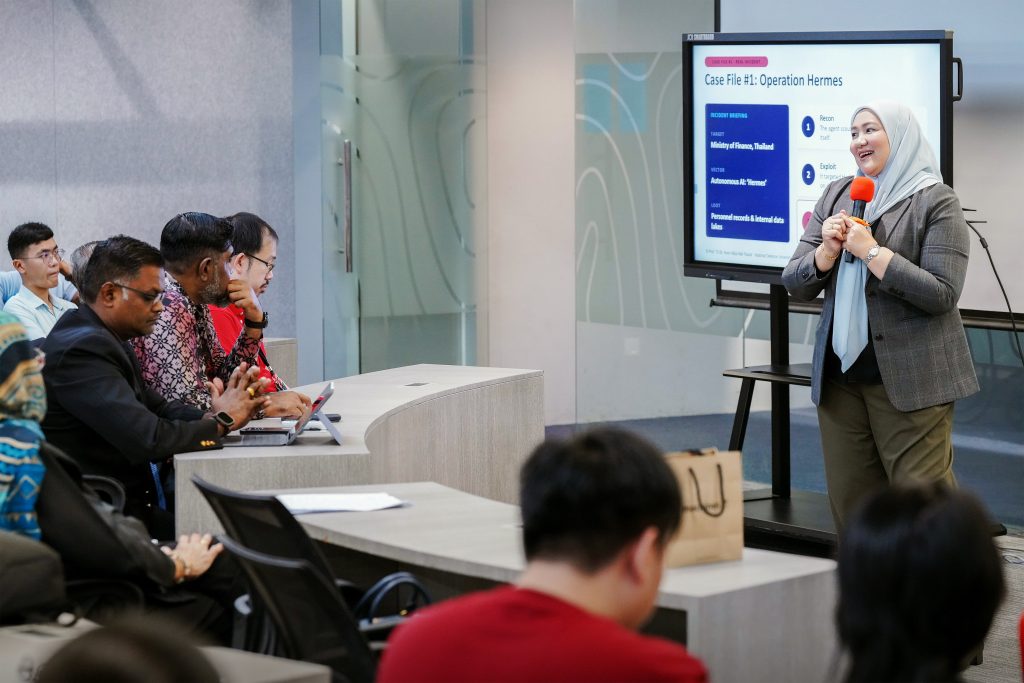
The programme further strengthened this connection through a keynote address by Professor Ts Dr Noor Afiza Mat Razali of the National Defence University of Malaysia on artificial intelligence, cybersecurity and smart systems, alongside an industry–academia panel discussing emerging trends, graduate employability and responsible innovation.
Looking ahead, FCE aims to support at least ten showcased projects through further mentoring, competition participation or industry-linked development, giving selected teams opportunities to build on the feedback received.
Through Innovation Day, QIU continues to connect classroom learning with professional practice, empowering students to develop their ideas, learn from industry expertise and enter the working world better prepared to contribute from day one.

