

by Dr Bhupinder Kaur
Sustainability is everywhere. Or rather, the word “sustainability” is. You hear it from leaders, brands, and universities like QIU: we need to make our activities more sustainable to protect our planet.
But what does it all really mean? How can I, by myself, do my part? And won’t it make my life more difficult?
Well, dear reader, we’re here to answer those questions.
The question we first have to ask ourselves is what is sustainability? Am I doing my part to be sustainable? Am I doing enough?
Sustainability is defined as the ability of something to be maintained at a certain rate or level. It’s also ensuring the avoidance of the depletion of natural resources in order to maintain an ecological balance.
We need to instil sustainability in our daily lives because it’s absolutely vital. Imagine it this way—when you share a house with someone, you would be considerate towards the needs and comfort of your fellow housemates.
The same principle is applied as a habitant of planet Earth. I must always keep in mind that I cohabit this place with many other people and living beings, so I must be considerate of their needs as well.
So now we’re on the same page. Here are some ways sustainability can begin with you.
The 3 Rs
Firstly, execute the simple 3 Rs: reduce, reuse and recycle—which you can start at home. Avoid buying over-packaged goods; they’re difficult to recycle because they are wrapped with several materials such as paper, foil, and plastic. Disposable goods such as paper plates and cups should also be avoided.
Instead, buy more durable goods as they last longer and save landfill space. Besides being sustainable, they’re much cheaper as well.
When I go to the supermarket, I bring along a cloth grocery bag with me to avoid using plastic bags. At home, there will definitely be unused boxes, cartons of finished milk, and biscuit tins. Instead of simply disposing of them, I make it a point to recycle them.
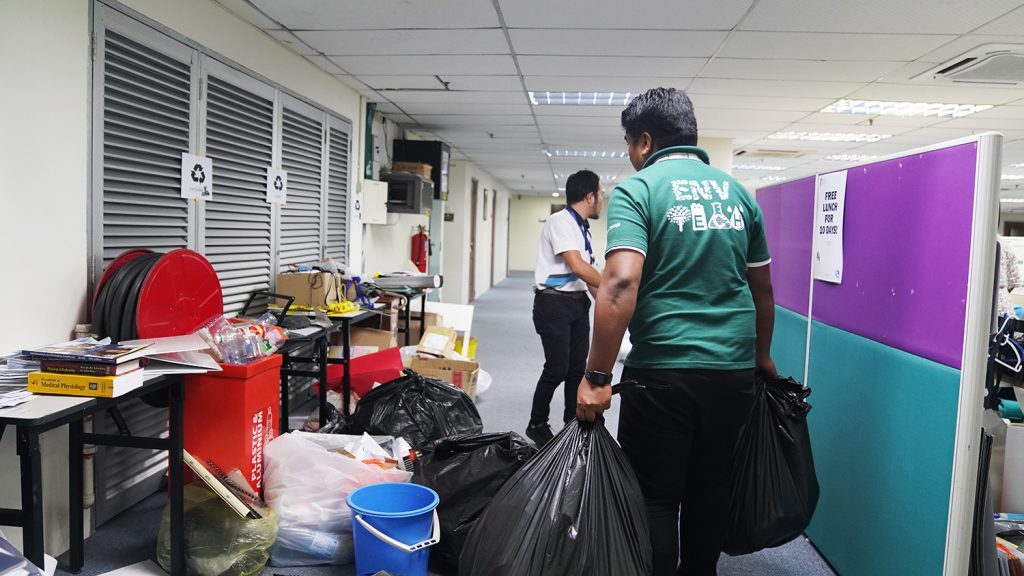
In adopting the 3 Rs, it then becomes easier for me to practice “Refuse” and “Repurpose”.
Waste Not, Want Not
Another way to be more sustainable is to avoid wastage. Start with the simple stuff—control how much food and water you consume. Having food and water in this day and age is a privilege that should never be taken for granted.
I grew up in a household where wasting food was not tolerated and I continue this practice to this day with my children. Have on your plate only how much you know you can finish. You can always have seconds if you are still hungry.
Don’t be surprised if you notice another benefit to reducing wastage—you might start losing a few extra pounds as well!
Change begins with me, with you, with us. Start with yourself, work on yourself, and be an example. Start by being more sustainable in your daily life and you will see changes in your quality of life. Slowly but surely, the rest will follow in your footsteps.
Time is irreversible and must be valued. Time can heal, but why choose to heal when we can preserve and protect in the first place. I believe our home, Earth, deserves our time in respect to making it a better place for us all.
Be the change you wish to see in the world.
Dr Bhupinder Kaur leads QIU’s Sustainable Development Goals (SDG) Steering Committee. She believes that every individual has the power to affect positive sustainable change if they start small.

