

Home » Health and Safety » What To Do In An Emergency
Things To Do
- Follow all instructions from emergency responders, wardens, campus security or staff.
- Alert others to the emergency situation in a calm, clear manner.
- Stay alert and aware of what is happening around you.
- Gather at assembly points according to emergency responders’ instructions.
- Check the University’s social media for updates.
Emergency Exits
If it’s safe to do so, use the emergency exits to leave the building. Look for the green and white exit signage.
Use the stairs during an emergency. Do not use the lifts.
Don’t force smoke and fire control doors to stay open during a fire alarm activation. You can still leave through these doors but they must be kept closed.
EMERGENCY ASSEMBLY POINTS

Teh Teng Seng Building (TTS):
Perak Girls School Field
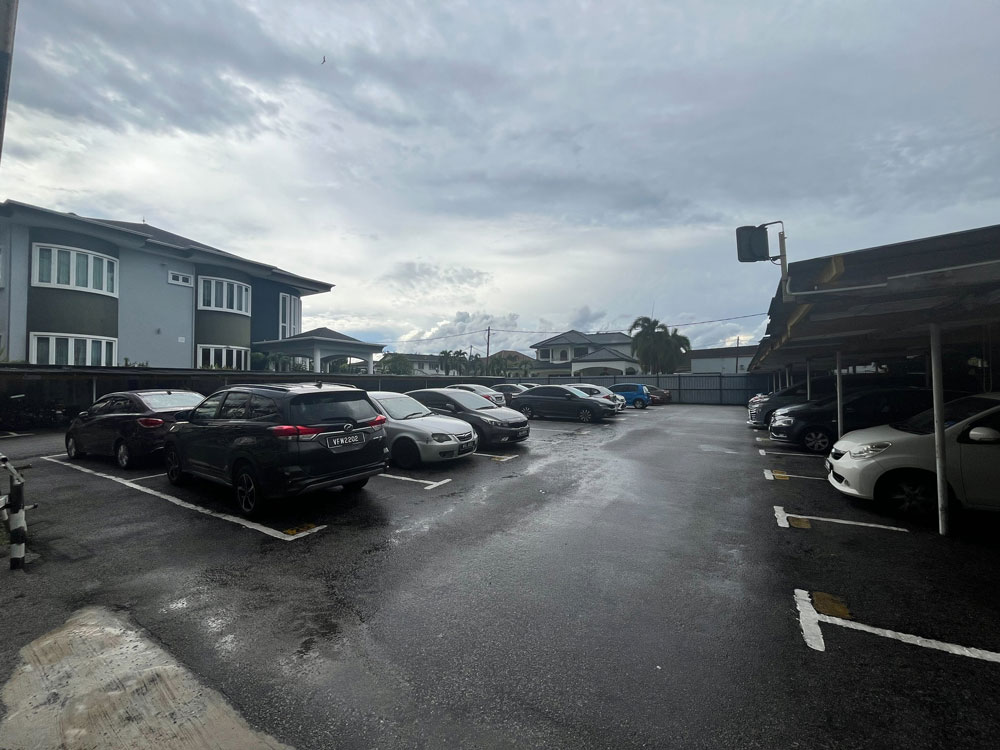
Applied Sciences Building (ASB)
ASB Parking Lot (behind the ASB building)
Faculty of Medicine (FOM)/Basketball court/Pharmaceutical Pilot Plant: FOM Car park
Different Emergency Situations
Medical Emergency
- In the event of a medical emergency, contact the safety officials or the emergency services.
- You can also contact the following:
- QIU Security Counter : 605-2490500
- Balai Bomba Dan Penyelamat Ipoh (Fire Department and Rescue Services): 05-245 1222.
Laboratory Safety Manual
For more detailed information on safety guidelines, refer to the safety manual
First-Aid Kit Site Map
Here’s where you can find first-aid kits around the campus. Only apply first-aid if you are confident, trained and and it is safe to do so.
Fire
If you discover a fire
- Trigger the nearest fire alarm call point by breaking the glass and pressing the switch down.
- Call… and advise Campus Security.
- Call 999/994 and alert emergency services.
- Use fire fighting equipment only if you are confident and it is safe to do so.
If you hear the fire alarm ringing continuously
- Keep calm but move quickly. Leave the building as quickly as possible.
- Don’t use lifts—keep left on stairs.
- If you are unable to go down the stairs due to an impairment, find a safe spot in or near the stairwell and alert someone that you need help.
- Don’t return to the building until the all-clear is given.
- Assemble at your safe assembly point and stay away from the building.
Earthquake
- Drop to the ground and get under solid cover. Stay there until the shaking stops. COVER and HOLD until the shaking stops.
- If you can’t find cover, crouch on your knees on the floor away from windows. Cover your head and neck with your arms.
- If you are a wheelchair user, lock your chair’s wheels.
- Stay inside and gather everyone in one place until it is safe to exit.
- Make your way to a large open space if your building is unsafe.
- If you are in a multi-storey building, check the stairs before heading to lower floors.
- If you are unable to go down the stairs due to an impairment, find a safe spot near the stairwell and alert someone that you need help.
Severe Weather/flooding
- Make sure all windows and doors are closed.
- Keep away from windows and doors.
- If you have to leave the building be aware of flying debris and high water levels.
- Leave unessential belongings.
- Report any damage or flooding to safety officials.
trapped in a lift
- Press the emergency button.
- Call the emergency number displayed in the lift. If the phone does not work, continue ringing the bell until someone outside the lift hears you.
- Contact safety officials.
- Remain calm and help to keep others calm.
- If you notice a problem with the lift from the outside, contact safety officials.
- Let the people in the lift know that help is coming.
Hazardous Substances
- Do not touch the substance.
- Remove everyone from the affected area if it is safe to do so.
- If it is safe, close doors and windows to Isolate and contain the hazardous material. Switch off isolation switches, ventilation and machinery if it is safe to do so .
- Call Campus Security on safety officials giving location and substance details if you know them.
- Do not return to the building until the ‘all clear’ has been given.
Violent/Aggressive Behaviour
- Call safety officials. They will notify emergency services as required
- Remove yourself from the situation.
- When possible, help any potential victims remove themselves from the situation.
- Do not make the situation worse.
Suspicious/illegal Activities
- Call and advise safety officials.
- Provide a description, location and the direction of travel of the suspicious person or people.
- Stay a safe distance away from the situation.
Suspicious Packages/Bomb Threats
- Do not touch the suspicious package.
- Ensure everyone leaves the immediate area.
- DO NOT activate building alarms or use electronic equipment such as mobile phones.
- From a safe distance call safety officials exact location and description of the suspect package.
- If a bomb threat is received by telephone, record as much detail as possible to pass on to authorities, then notify Campus Security.
- Follow instructions from Campus Security.
- Only return to the building when the ‘all clear’ has been given.
A Person With a Weapon
Escape
- Remove yourself and others from the area rapidly. If you cannot run, hide.
- Do not congregate in open areas or wait at evacuation points.
- Once you’ve reached a safe area, immediately notify emergency services or Campus Security.
- Alert others about the situation and tell them to avoid the affected area.
Hide
- Find a safe place in an out-of-sight location or behind a lockable door.
- Move as far as possible away from the entrance of the room you’re in.
- Be aware of entry and exit points.
- Be quiet. Switch your phone to silent mode.
- If opportunities to escape are presented, take them.
Utilities Failure
Electricity Failure
- If evacuation is necessary, EXIT signs and emergency lighting will indicate exit paths.
- People stranded in lifts will still be able to communicate with emergency services, safety officials or the lift company directly using the lift emergency button or phones.
- If you are with a person with special needs, remain with them. Call safety officials for assistance.
- In labs, specific procedures will operate during a power outage. Make sure you are aware of these procedures.
- Keep all refrigerators and freezers closed.
- Treat all electrical equipment as live, as power may be restored at any time without notice.
Gas Failure/Leak
- If you discover a gas leak, warn your colleagues.
- DO NOT activate building alarms, use mobile phones, hand-held radios or other electronic equipment.
- If it is safe to do so, turn off ventilation and machinery and make sure that flames are extinguished.
- Evacuate the building—avoiding the areas of contamination and closing doors behind you.
- After evacuating, notify safety officials from a safe location, and give as much detail as possible.
- Do not return to the building until the ‘all clear’ has been given
Emergency Contacts
Call 999 for emergency services. To reach the Fire Department specifically, call 994.
SAFETY OFFICIALS
- Campus Security (011-6183 2392)
- Ms Harpreet (016-4441499)

